PMI Core Selection & Grade Comparison Hub

PMI Core Selection & Grade Comparison Hub

PMI Core Selection & Grade Comparison Hub

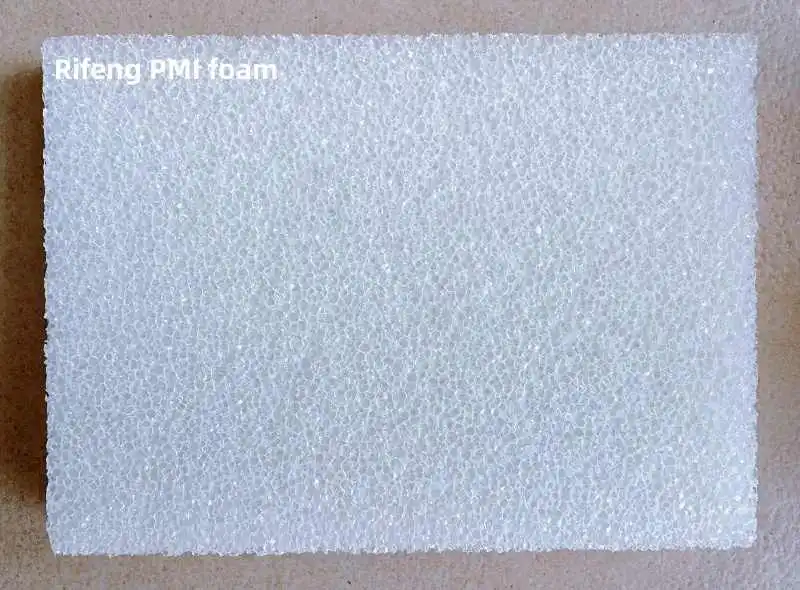
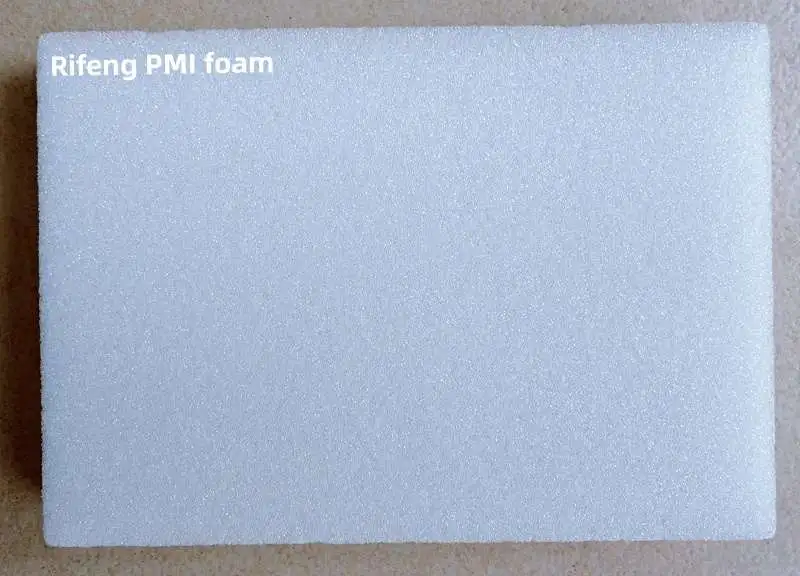
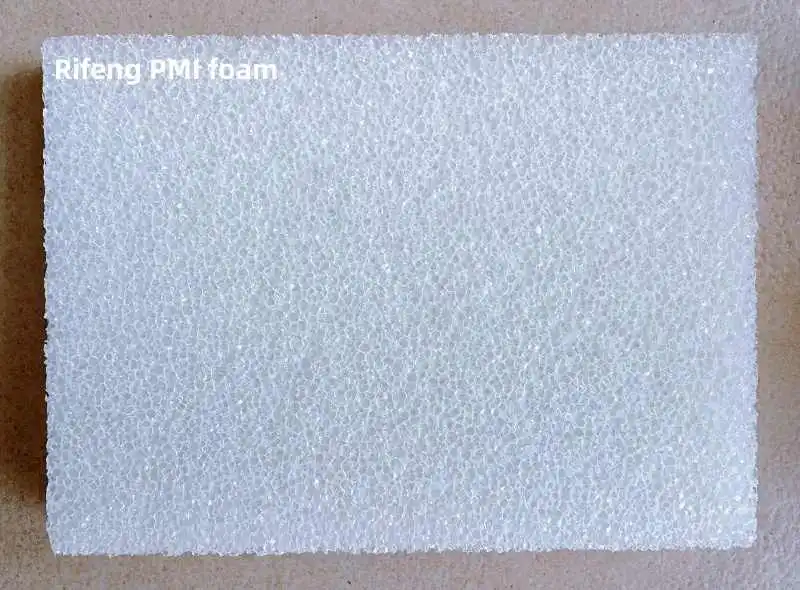
Rifeng WF is a closed-cell rigid PMI foam, offered as an industrial-grade structural PMI foam core in 52WF, 75WF and 110WF densities. This hub places the three grades side by side so you can match density, strength and thermal limits to your part before you ask for pricing.

  • CFC-free formulation
  • Prepreg-ready
  • Industrial grade
Rifeng WF - Cost-Effective Industrial Grade PMI Foam for Structural Composites

What Drives a PMI Foam Core Buying Decision

Rifeng WF is a medium cell size, closed-cell rigid PMI foam and is described as the most cost-effective industrial-grade product in the range. Six properties shape most specification and purchasing conversations.

01

Closed-cell structure

The closed-cell structure keeps resin at the interface instead of letting it soak deeper into the core. Less resin take-up means a lower final part weight and reduced overall cost.

02

Strength-to-weight ratio

A high strength-to-weight ratio makes the core a practical choice for lightweight parts that are still subject to mechanical stress.

03

Thermal stability

Robust thermal stability supports reliable results across different manufacturing techniques, with dimensional stability maintained up to 180 °C.

04

Prepreg compatibility

The grade is engineered specifically for seamless integration with prepreg processing, and the same core is also used in resin infusion and RTM routes.

05

Process window

Cure and processing capability reaches temperatures up to 130 °C and pressures of 0.3 MPa, which covers many standard prepreg, infusion and RTM cycles.

06

Forming and machining

The foam can be thermoformed or CNC machined to meet stringent tolerances, and is supplied as pre-shaped, ready-to-use cores in simple or complex geometries.

Master Grade Comparison: 52WF, 75WF and 110WF

All three grades share the same closed-cell PMI chemistry and the same heat distortion resistance class. Density is the lever that separates them, and every mechanical value rises with it.

Property Test method Unit Rifeng 52WF Rifeng 75WF Rifeng 110WF
DensityISO 845kg/m³52 ± 1275 ± 15110 ± 20
Compressive strengthISO 844MPa0.751.453.50
Tensile strengthASTM D638MPa1.652.453.50
Elastic modulusASTM D638MPa6590160
Elongation at breakASTM D638%≥ 2.5≥ 2.5≥ 2.5
Flexural strengthASTM D790MPa1.552.404.60
Shear strengthASTM C273MPa0.701.252.20
Shear modulusASTM C273MPa203555
Heat distortion resistanceDIN 53424°C≈ 180≥ 180≥ 180

Values are typical for the Rifeng WF series. Confirm the current data set for your project before you freeze a specification, especially where the ± tolerances on density sit close to a performance threshold.

Density vs compressive strength across the three grades
52WF density
52 kg/m³
52WF compression
0.75 MPa
75WF density
75 kg/m³
75WF compression
1.45 MPa
110WF density
110 kg/m³
110WF compression
3.50 MPa
Rifeng WF - Cost-Effective Industrial Grade PMI Foam for Structural Composites

Match the Grade to Mechanical and Thermal Load

Start from the load case, not from the density column. Two scenario questions usually shortlist a grade: how much compression and bending the core has to carry, and whether the heat distortion limit is inside the process window.

Requirement signal Start with Why
Lowest weight wins, modest mechanical load52WFLowest density at 52 kg/m³ with 0.75 MPa compressive and 0.70 MPa shear strength
Balanced stiffness for general sandwich panels75WFMid density with 1.45 MPa compressive, 2.40 MPa flexural and 1.25 MPa shear strength
Highest load, hard points and compression-critical skins110WF3.50 MPa compressive, 4.60 MPa flexural, 2.20 MPa shear and a 160 MPa elastic modulus
Service temperature near 180 °CAny WF gradeHeat distortion resistance is ≈ 180 °C to ≥ 180 °C across the range, so load and weight decide instead

Process limits are a second filter: prepreg, infusion and RTM all run at up to 130 °C and 0.3 MPa on this core, so a stiffer grade can be chosen purely on load without narrowing the process route.

Compressive strength (MPa)
52WF
0.75
75WF
1.45
110WF
3.50
Flexural strength (MPa)
52WF
1.55
75WF
2.40
110WF
4.60
Shear strength (MPa)
52WF
0.70
75WF
1.25
110WF
2.20

Select by Manufacturing Process and Core Format

The process route rarely changes the grade, but it does change the core format you should ask for and the tolerance you can hold. Match the route first, then confirm sheet size and thickness.

Prepreg processing

Engineered specifically for seamless integration with prepreg techniques, running within the 130 °C and 0.3 MPa window.

Resin infusion

The closed-cell structure limits resin take-up to the core interface, which keeps the finished part lighter and the resin cost lower.

RTM

The same thermal and pressure capability applies, so one grade can serve prepreg, infusion and RTM production lines.

Thermoforming

The foam can be easily thermoformed, which is useful when the part has curvature or a compound shape.

CNC machining

Cores can be CNC machined to meet stringent tolerances and delivered pre-shaped and ready to use.

Industrial scale-up

Engineered to provide consistent performance in large-scale industrial manufacturing, which matters when a program ramps.

Sales range and tolerances

Product Sheet size (mm) Thickness (mm)
52 WF2500 × 12501 – 120
75 WF2500 × 12501 – 110
110 WF2300 × 12501 – 90

Sheets 1 – 4 mm thick are supplied in 1/4 or 1/2 sheet size. Thickness tolerance is ± 0.2 mm, and length / width tolerance is ± 2 mm — worth checking against your bond-line and vacuum-bag requirements before ordering.

Where Rifeng WF Fits in Production

The series is aimed at industrial programs where cost per part and repeatable output matter as much as mechanical performance.

Wind turbine blades

Named as a primary use on the product page. Longer blade structures benefit from the weight saving that comes with low resin take-up, and from a grade ladder that scales strength with density.

Automotive structural panels

Also named as a primary use. Panel programs are volume-sensitive, which is where the cost-effective industrial positioning of the WF series becomes the deciding factor.

Lightweight parts under mechanical stress

The stated high strength-to-weight ratio suits lightweight components that still carry load. Choose 52WF for the lightest build, 75WF for balance, 110WF when local loads are high.

From Shortlist to Quote

Rifeng WF is sold on a quote basis through the product page — there is no online checkout — so the fastest route is to send your grade, format and volume in one message.

Step 01

Confirm the grade

Compare 52WF, 75WF and 110WF against your load case and pick the density band that satisfies it with the least weight.

Step 02

State sheet, thickness and shape

Give the sheet size, thickness within the 1 – 120 / 1 – 110 / 1 – 90 mm range, and whether you need pre-shaped or CNC-machined cores.

Step 03

Request the quote

Use the quote button on the product page or contact the team directly for industrial volumes, custom geometries and project support.

Need pricing, custom cores or a bulk volume?

Send the grade, thickness, quantity and cutting requirement — the team replies with current pricing and lead time.

Related Reading

Three notes to help clarify product requirements before contacting the supplier.

Industrial Grade PMI Foam Manufacturing for Wind and Automotive Projects

Wind and automotive composite buyers need a production-oriented industrial grade PMI foam manufacturer that can prove batch control, quality-system discipline, and engineering support before…

Read article

Wholesale PMI Structural Foam Core Sheets for Composite Builders

Wholesale PMI structural foam core sheets are specified by footprint, thickness range, density grade, and tolerance before any chemistry discussion.

Read article

Rifeng WF PMI Foam Density Grades and Strength Trends

Density is the fastest way into a Rifeng WF datasheet, because it tracks how compressive, tensile, flexural, and shear values rise across 52WF, 75WF, and 110WF.

Read article

Frequently Asked Questions

what is the difference between rifeng 52wf, 75wf and 110wf?

they are three densities of the same closed-cell pmi foam. density rises from 52 kg/m³ to 75 kg/m³ and 110 kg/m³, and mechanical performance rises with it — compressive strength goes from 0.75 mpa to 1.45 mpa and 3.50 mpa, flexural strength from 1.55 mpa to 2.40 mpa and 4.60 mpa, and shear strength from 0.70 mpa to 1.25 mpa and 2.20 mpa. pick the lowest density that still carries your load.

what is rifeng wf made of?

rifeng wf is a closed-cell rigid polymethacrylimide (pmi) foam with a medium cell size. it is completely free of cfcs and is positioned as the most cost-effective industrial-grade product in the range.

what processing temperatures and pressures does this pmi foam core handle?

processing capability reaches temperatures up to 130 °c and pressures of 0.3 mpa. separately, heat distortion resistance is quoted as approximately 180 °c for 52wf and at least 180 °c for 75wf and 110wf, which is the figure to check against your cure cycle.

which manufacturing processes can use rifeng wf?

it is engineered for prepreg processing and is also used in resin infusion and rtm. the core can additionally be thermoformed or cnc machined, and is available as pre-shaped, ready-to-use cores in simple or complex geometries.

what sheet sizes and thicknesses are available?

52 wf and 75 wf are supplied at 2500 × 1250 mm with thicknesses of 1 – 120 mm and 1 – 110 mm respectively, while 110 wf is supplied at 2300 × 1250 mm with thicknesses of 1 – 90 mm. sheets 1 – 4 mm thick come in 1/4 or 1/2 sheet size, with thickness tolerance of ± 0.2 mm and length / width tolerance of ± 2 mm.

how do i request a price or a custom shaped core?

orders are quote-driven. use the quote request on the rifeng wf product page or send your grade, thickness, sheet or cut geometry and volume through the contact page, and the team will respond with pricing and lead time.